Positive Plasticity: Rewiring the Brain Through Love, Awareness & Conscious Practice
Positive plasticity is the beautiful possibility that our brain, nervous system, emotional patterns and inner world can keep changing in life — not only through struggle, but through love, awareness, repetition, nourishment, music, movement, gratitude, nature and meaningful connection.
Rather than being trapped by old conditioning, positive plasticity reminds us that every conscious breath, every kind thought, every loving choice and every moment of presence can become part of a new pathway.
What Is Positive Plasticity?
Positive plasticity is the intentional cultivation of helpful neural pathways, emotional habits and nervous system responses. It is closely related to neuroplasticity — the brain’s ability to adapt and reorganise — but with a focus on what strengthens wellbeing, compassion, resilience, creativity and inner peace.
In simple words: what we practise, we become better at. If we practise fear, stress and reactivity, those pathways can become stronger. If we practise gratitude, self-awareness, calm breathing, kindness and healthy connection, those pathways can also grow stronger.
Practices That Support Positive Plasticity
- Mindfulness: noticing thoughts, emotions and sensations without becoming completely identified with them.
- Gratitude: training attention to recognise beauty, support, kindness and possibility.
- Exercise: supporting mood, circulation, brain health, confidence and energy.
- Music: helping shift emotional states, open the heart and regulate the nervous system.
- Nature: grounding the body, calming the mind and reconnecting us with simplicity.
- Nutrition: nourishing the gut-brain connection and supporting stable energy.
- Conscious connection: developing emotional intelligence, empathy and safe human bonding.
- Breathwork: gently guiding the body toward presence, safety and regulation.
The Nervous System Learns Through Repetition
The nervous system is always listening. It learns from what we repeat. This means healing and transformation are not usually one giant moment — they are often thousands of small loving choices repeated over time.
A hand on the heart. A deep breath before reacting. A walk in nature. A moment of forgiveness. A nourishing meal. A song that brings you back to yourself. A conversation where truth is spoken kindly. These moments matter.
Positive Plasticity & Vibroacoustic Therapy
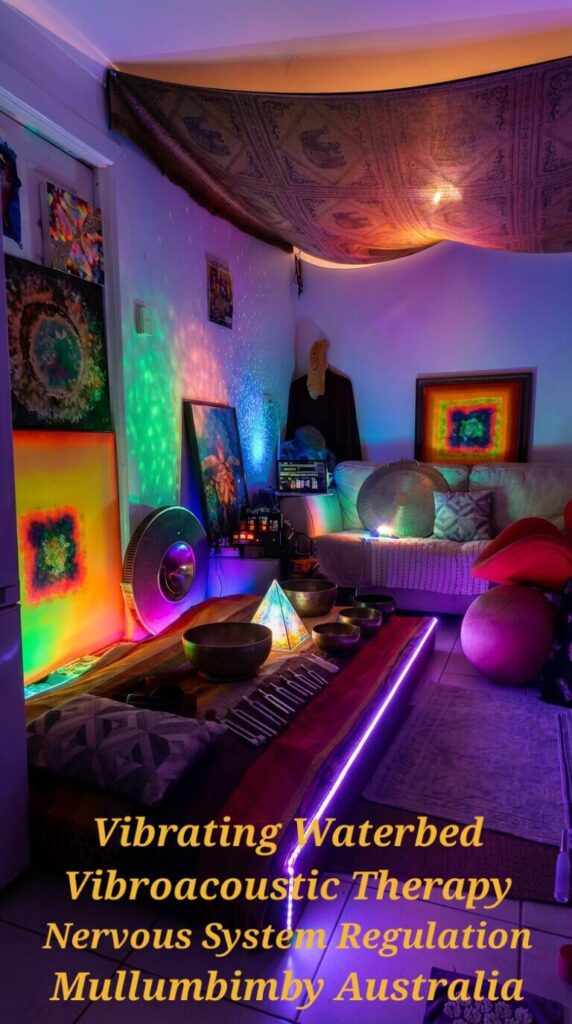
Vibroacoustic waterbed therapy may support positive plasticity by creating a deeply relaxing environment where the body can soften, the mind can settle, and the nervous system may shift toward greater calm.
Gentle low-frequency vibration, music, breath awareness and intentional rest can become a powerful ritual for helping the body remember safety, stillness and inner harmony.
This is not presented as a medical treatment or cure. It is a complementary wellbeing experience designed to support relaxation, presence and nervous system care.
Positive Plasticity in Relationships
Relationships can be one of the greatest places to practise positive plasticity. Every time we choose curiosity over judgement, honesty over avoidance, repair over blame, and compassion over defensiveness, we teach the nervous system a new possibility.
Explore more heart-led relationship guidance here:
Conscious Dating Guidance for New Relationships
Conscious Dating Tips & Deep Connection Questions
Pink Hat Tantra: A Heart-Based Path
A Simple Daily Positive Plasticity Practice
- Place one hand on your heart.
- Take three slow breaths.
- Ask: “What would love do?”
- Name three things you are grateful for.
- Choose one small action that supports your future self.
Over time, these small sacred repetitions can become a new inner architecture.
The Invitation
Positive plasticity is not about forcing yourself to be positive all the time. It is about creating conditions where love, truth, awareness and wellbeing have more space to grow.
We are not fixed. We are living, breathing, changing beings. Every day offers another opportunity to re-pattern the mind, soften the heart and embody a more beautiful way of being.
Explore More Heart-Led Awakening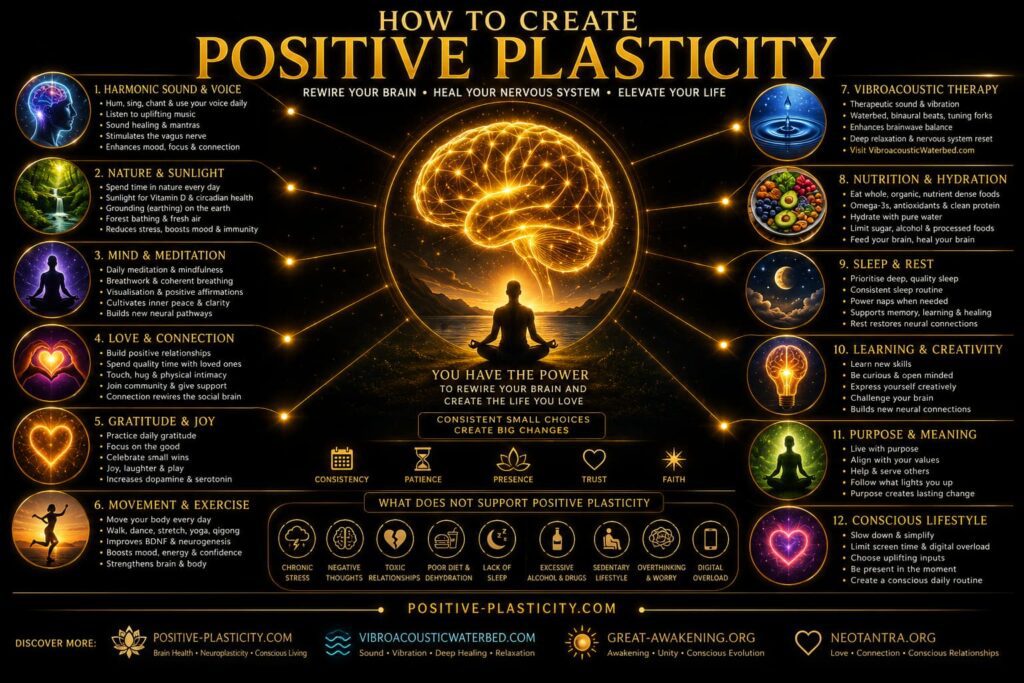
How To Create Positive Plasticity
Rewire your brain • Heal your nervous system • Elevate your life through consistent small choices
What Is Positive Plasticity?
Positive plasticity is the art of consciously shaping the brain, nervous system, body and emotional patterns through repeated uplifting choices. Every thought, breath, movement, song, relationship, meal, moment in nature and act of love can become a signal that teaches the body: life is safe, meaningful, creative and worth opening to.
The brain changes through repetition. Small daily practices, done with presence and love, can support new neural pathways for calm, clarity, resilience, gratitude, creativity and deeper connection.
Consistent small choices create big changes.
1. Harmonic Sound & Voice
- Hum, sing, chant or use your voice daily.
- Listen to uplifting music that opens the heart.
- Use mantras, affirmations and sacred sound.
- Sound can support mood, focus, connection and vagal tone.
- Try gentle humming with one hand on the heart for 3 minutes.
2. Nature & Sunlight
- Spend time in nature every day.
- Receive morning sunlight for circadian rhythm support.
- Ground barefoot on earth, grass or sand.
- Forest bathe, breathe fresh air and listen to birds.
- Let nature remind your nervous system that it belongs.
3. Mind & Meditation
- Practice daily meditation or mindfulness.
- Use coherent breathing, belly breathing or box breathing.
- Visualise positive outcomes with feeling.
- Use affirmations that create safety and possibility.
- Train the mind to return to presence instead of fear.
4. Love & Connection
- Build positive, emotionally safe relationships.
- Spend quality time with people who nourish your spirit.
- Offer hugs, eye contact, kindness and deep listening.
- Join community, circles, workshops or conscious gatherings.
- Connection rewires the social brain through safety and belonging.
5. Gratitude & Joy
- Write down 3 things you are grateful for each day.
- Celebrate small wins.
- Play, laugh, dance and enjoy simple pleasures.
- Focus on what is good without denying what is hard.
- Gratitude can help shift attention toward possibility.
6. Movement & Exercise
- Move your body daily.
- Walk, stretch, dance, swim, do yoga or qigong.
- Exercise supports brain health, mood and confidence.
- Movement helps complete stress cycles in the body.
- Choose movement that feels joyful, not punishing.
7. Vibroacoustic Therapy
- Use therapeutic sound and vibration to support deep relaxation.
- Experience low-frequency vibration through a vibroacoustic waterbed.
- Combine with binaural beats, tuning forks and calming music.
- May support nervous system regulation, rest and brainwave balance.
- Explore more at VibroacousticWaterbed.com.
8. Nutrition & Hydration
- Eat whole, organic, nutrient-dense foods where possible.
- Support the brain with healthy fats, protein and colourful plants.
- Drink clean water and stay hydrated.
- Reduce processed foods, excess sugar and alcohol.
- Feed your gut, feed your brain, feed your future self.
9. Sleep & Rest
- Prioritise deep, quality sleep.
- Create a consistent sleep routine.
- Use power naps when needed.
- Rest supports memory, learning, emotional balance and healing.
- Switch off screens earlier and let the body soften.
10. Learning & Creativity
- Learn new skills and challenge your brain.
- Paint, write, build, garden, DJ, sing or make beauty.
- Stay curious and open-minded.
- Creativity keeps the brain alive, playful and adaptive.
- Every creative act tells the nervous system: “I am free.”
11. Purpose & Meaning
- Live with purpose and align with your values.
- Help others in ways that feel authentic.
- Follow what lights you up.
- Meaning creates resilience during challenge.
- Ask: “What would love do?”
12. Conscious Lifestyle
- Slow down and simplify.
- Limit screen time and digital overload.
- Choose uplifting inputs, conversations and environments.
- Be present in the moment.
- Create a daily routine that supports peace, health and joy.
What Does Not Support Positive Plasticity?
- Chronic stress without recovery.
- Negative self-talk and repeated fear-based thinking.
- Toxic relationships and emotional chaos.
- Poor diet, dehydration and lack of nutrients.
- Ongoing sleep deprivation.
- Excessive alcohol, drugs or numbing behaviours.
- Sedentary lifestyle and lack of movement.
- Overthinking, worry and mental looping.
- Digital overload, doom scrolling and constant stimulation.
A Simple Daily Positive Plasticity Practice
Morning
- Hand on heart, smile gently and take 10 slow breaths.
- Receive sunlight and drink water.
- Speak one loving affirmation out loud.
Daytime
- Move your body for at least 10–30 minutes.
- Eat nourishing food and hydrate.
- Pause for gratitude before reacting to stress.
Evening
- Turn screens down and soften the nervous system.
- Listen to calming music or receive sound vibration.
- Write down 3 wins, 3 gratitudes and one thing you are learning.
Discover More
Explore deeper resources on positive plasticity, nervous system healing, conscious living and sound vibration: