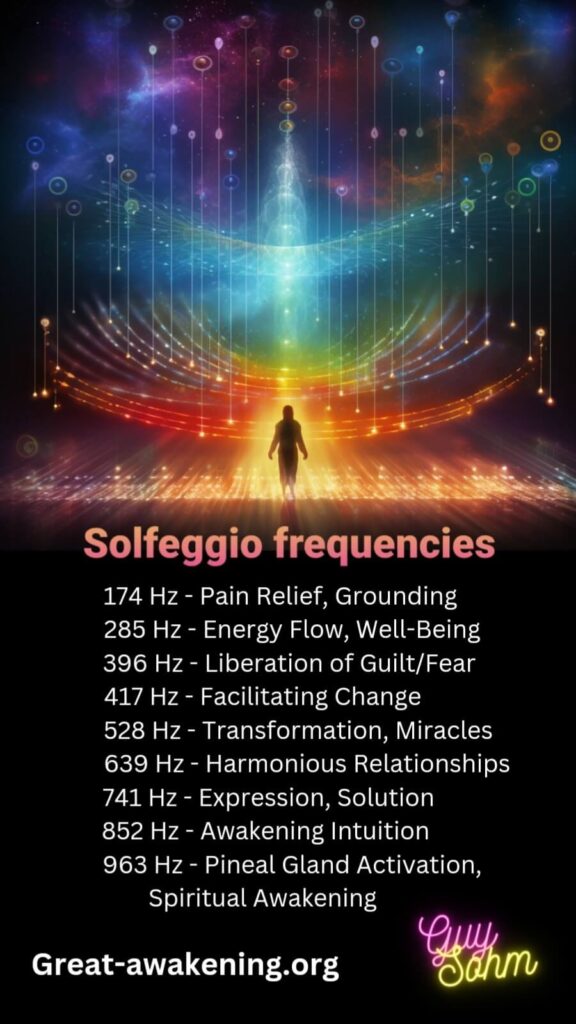
Solfeggio Frequencies Guide
Benefits and traditional uses.
Considered a soothing base tone. Used to create a sense of physical ease and safety in the space.
- Encourages muscle release and slow, steady breathing.
- Useful as a long, low under‑bed layer for relaxation.
- Pairs well with ocean/rain ambience and deep drums.
- Set a calming field at the start of sessions.
- Grounding practices and gentle somatic work.
- Background support during bodywork or massage.
Linked in practitioner lore with subtle cellular harmony and integration after stress.
- Promotes a sense of restoration after movement/breathwork.
- Combines nicely with didgeridoo or harp for bodywide feel.
- Blends with 40 Hz tactile for deeper somatic resonance.
- Post‑practice integration periods.
- Supportive background in sound baths.
- Gentle recovery‑themed sessions.
Traditionally associated with grounding and loosening heavy emotions.
- Supports exhale‑led breathing and pelvic grounding.
- Warm, steady tone for emotional regulation.
- Alternates well with 417 Hz for wave‑like clearing.
- Root‑centered meditations and movement.
- Letting‑go rituals; safe‑space establishing.
- Working with fear, shame, or heaviness.
Linked with resetting and forward motion—great for transitions.
- Encourages momentum and fresh starts.
- Bright but gentle; complements chimes and bowls.
- Use as a fade‑in marker for a new phase in the journey.
- Releasing old patterns, inviting new intentions.
- Transition points in ceremonies and classes.
- Pre‑intention setting and journaling moments.
Commonly nicknamed the “love” tone in popular traditions; used for luminous, uplifting passages.
- Supports heart‑coherence breath pacing (≈5–6 bpm).
- Sweet centrepiece for gratitude/devotion arcs.
- Layer lightly so vocals/bowls can shimmer above.
- Heart‑opening meditations and prayers.
- Affirmations of self‑love and compassion.
- Gentle sunrise/sunset soundbath segments.
A relational tone, inviting warmth, empathy, and belonging—lovely under mantra or choir.
- Encourages synchronized breath and shared rhythm.
- Softens edges in groups; promotes togetherness.
- Balances nicely with 528 Hz for tender arcs.
- Relational practices, eye‑gazing, group humming.
- Community circles and kirtan‑style singing.
- Reconnection after challenging dialogues.
Often associated with purification/clarity. Invigorating in short arcs—excellent pre‑intention.
- Brightens attention; supports clear voice/toning.
- Refreshes focus without harshness.
- Bell‑like layering prevents muddiness.
- Vocal warm‑ups, mantra articulation (OM/AH/HU).
- Pre‑meditation clearing.
- Short, crisp “reset” sweeps between tracks.
Linked with insight and inner listening—ideal in late‑session spaciousness.
- Invites reflective, imaginal space.
- Combines with crystal bowls for luminous airiness.
- Moderate levels keep it velvety and gentle.
- Third‑eye contemplations and silent sittings.
- Dream‑journaling or visualization work.
- Twilight or candlelit meditations.
A shimmering, celestial finisher—symbolically connected with unity/wholeness in tradition.
- Ethereal overtones; exquisite for closing arcs.
- Guides attention from sound into stillness.
- Pairs with soft choir or high bowls.
- Closing blessings and silent prayer.
- Crown‑centered meditations.
- Integration rest at session end.
This guide covers the nine commonly referenced Solfeggio tones: 174, 285, 396, 417, 528, 639, 741, 852, 963 Hz. Descriptions reflect traditional/modern practitioner use and personal reports, not medical claim.